
What Northern Dancer lacked in size he more than made up for in willpower. He bullied his way through the early days of his race horse preparations but when he got to the middle months of his juvenile season and was on the threshold of a debut, the potential he was showing in short but powerful training bursts made his exasperating antics more tolerable for his training staff. When he made his initial start in August of 1963 the hype regarding his potential was partly realized on the Fort Erie dirt track and he quickly opened up late in that successful first start. The main objectives, however, were the late season Stakes races where a coveted championship could be solidified.
The Cup and Saucer Stakes on the turf at Woodbine in late September promised to provide Northern Dancer an even bigger profile. It seemed incredulous that after building an advantage in the stretch he would become weary inside the final furlong. Northern Dancer gave away the race to rank outsider, Grand Garcon. It was a disheartening late race visual and wouldn’t be the last one.
A couple of weeks later Northern Dancer relocated to Woodbine’s main track for the Coronation Futurity Stakes. His lack of stretch power in the Cup and Saucer Stakes emboldened a large field of rivals to take him on. That perceived vulnerability was folly. Northern Dancer outclassed his rivals and his stellar performance secured for him the title of Champion Two Year Colt. He underlined his superiority late in the season with another sparkling triumph in his first start outside Canada. The Remsen Stakes at Aqueduct race track in New York concluded his juvenile campaign on a high note. Northern Dancer also drew clear of that new set of opponents.
After some magic patching of a split left front hoof by imported California blacksmith Bill Bane, Northern Dancer embarked on a Florida training regime to prepare for a couple of the south’s most noted Kentucky Derby prep races, the Flamingo at picturesque Hialeah and the Florida Derby at the more touristy Gulfstream Park. In both victories momentum was surely gained but his rider was lost. Two time Kentucky Derby winning jockey Bill Shoemaker it was revealed coveted another and surprisingly to some decided to divorce Northern Dancer ahead of their planned date in Louisville and hook up with enemy number one, California import, Hill Rise. An ample substitute was found in jockey Bill Hartack. He was already a three time Kentucky Derby winner most recently in 1962 for Northern Dancer’s trainer, Huratio Luro, aboard Decidedly. Hartack and Northern Dancer auditioned together at Lexington’s Keeneland race track in a final prep race, the Blue Grass Stakes, which was an under whelming success.
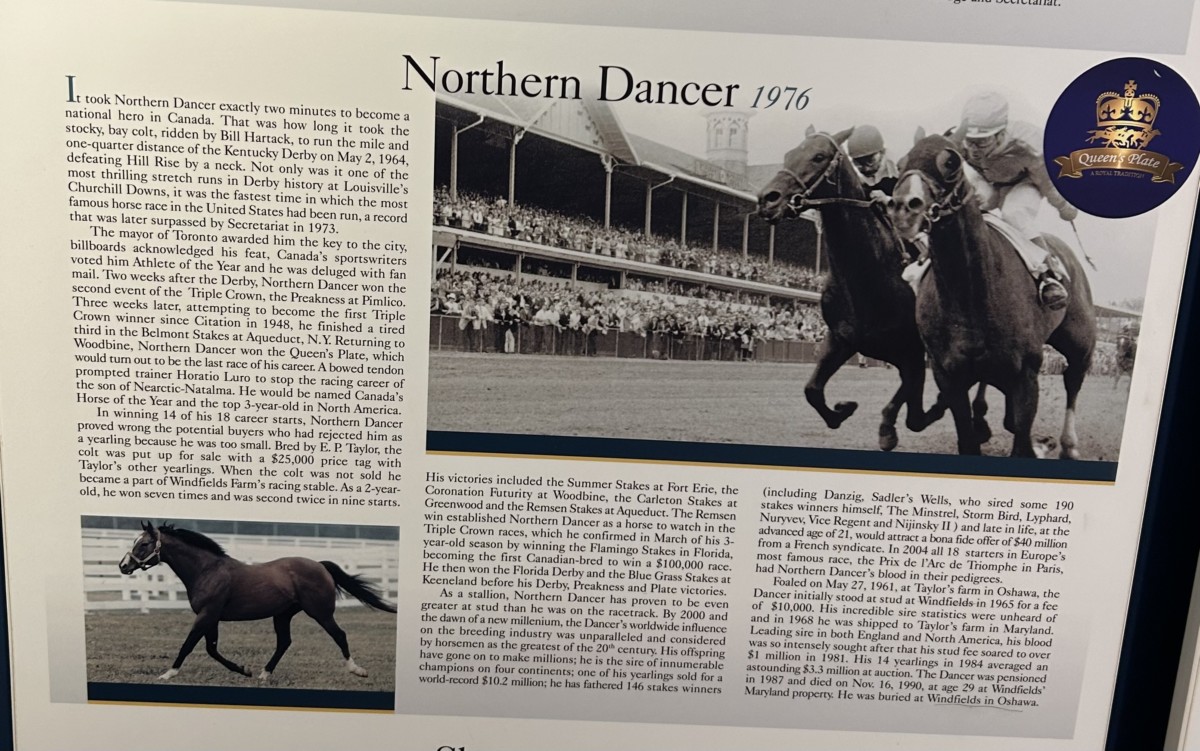
What made the stretch run of the, May 2, Kentucky Derby needlessly compelling for those watching on television was the lack of perspective regarding the position of the approaching finish line. The topography of the lengthy stretch run at Churchill Downs was unforgiving and had swallowed up the advantage of many important leaders in Derby history and in that regard was one of the most expensive pieces of real estate in America. Northern Dancer in saddle clothe #7 playing the role of, David, led the Derby field in the home lane by a couple of lengths but looming menacingly on his outside was the advancing, Hill Rise, in saddle clothe #11 in the role of, Goliath. Northern Daner required two of his stabby strides to match the energy of one of Hill Rise’s long and loping strides. Thoughts of Northern Dancer’s stretch paralysis in the Cup and Saucer Stakes were echoing in the final yards. It seemed likely Hill Rise’s late thrust was about to dash Canadians’ dreams. Instead, Northern Dancer, relied on his willful nature and bullying instincts in trying to slay his massive opponent. The camera revealed the coveted finish line just in time. It was ‘7 come 11’ and in the record time of two minutes flat. Canada had its first Kentucky winner, a colt still three and a half weeks shy of his actual third birth date. Shoemaker had chosen unwisely.
The Preakness was a formality. Northern Dancer’s stretch superiority was never threatened. Almost immediately a near consensus projected a Triple Crown winner in the making. Some close to Northern Dancer, however, weren’t at all confident of his achieving success at a mile and half.
The Belmont stakes was held at Aqueduct that year while Belmont Park was being refurbished. Northern Dancer had enjoyed success over this surface as a juvenile in the Remsen Stakes but at a much shorter distance. Despite a slow pace and Northern Dancer using an off the pace technique, he was in prime position just off the stretch lead of Quadrangle and Roman Brother both of whom had also overcome the pedestrian fractions. Quadrangle drew off to win by two lengths and Roman Brother held second by four lengths over a sagging and thoroughly defeated, Northern Dancer, who saved third by half a length over Hill Rise. The visual verdict of Northern Dancer’s stretch collapse in the Belmont Stakes was damning and fueled matter of fact criticism from industry breeders of Northern Dancer’s inherit lack of stamina. He would have to leave it to his future star sons to totally erase that premature conclusion. Whispers grew louder and some openly expressed concerns that Northern Dancer was physically compromised. The sands of his wellness hour glass were surely running out.
All negative thoughts were cast aside in preparation for Northern Dancer’s glorious homecoming parade in the 105th Queen’s Plate, June 20, at Woodbine. Once again, visuals played a significant role this time in a total swing of emotions. Entering the backstretch with about five of the ten furlongs remaining, Northern Dancer, was stuck on the rail with all of his outclassed rivals congregated in front of him. Oddly, Hartack was forcibly reserving him at this juncture. Once extricated from the rail, Northern Dancer, used the open air to fill his sails and in a quarter mile of drama he cruised by his opponents. Once in front Hartack again took a hard hold to preserve Northern Dancer during the stretch run eventually gearing him down and skewing the already wide margin of victory and depriving Northern Dancer of a record clocking. The payoff was a miniscule $2.30. Taylor had his tenth Queen’s Plate winner, Luro his third and Canada had its coveted first ever Kentucky Derby/Queen’s Plate hero.
The immediate celebration was jubilant. However, the afterglow was dimmed by the news that Northern Dancer had indeed been further physically compromised and couldn’t safely continue with his racing career which remarkably had lasted less than a year’s time in actual duration. The silver lining of Northern Dancer’s early retirement was that preparations for his stallion career could begin, a unfathomable chapter in his storied life that is still being written.
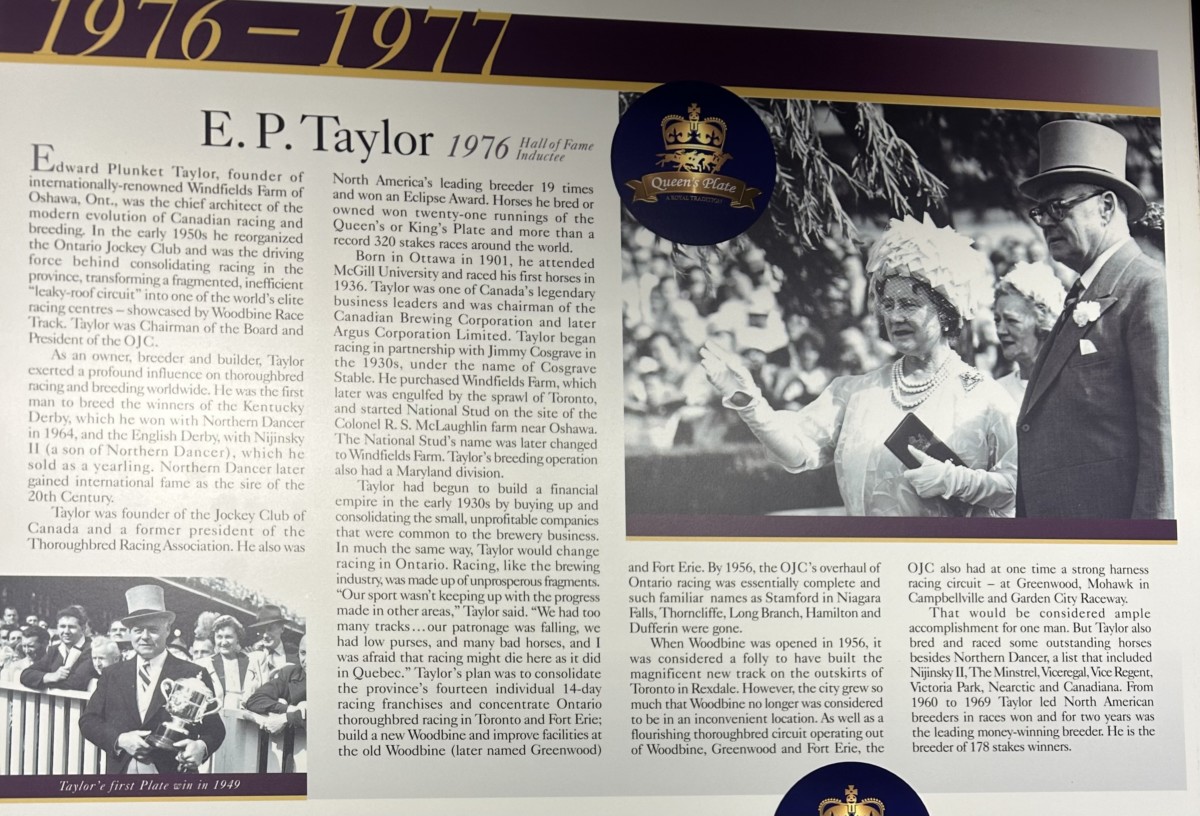
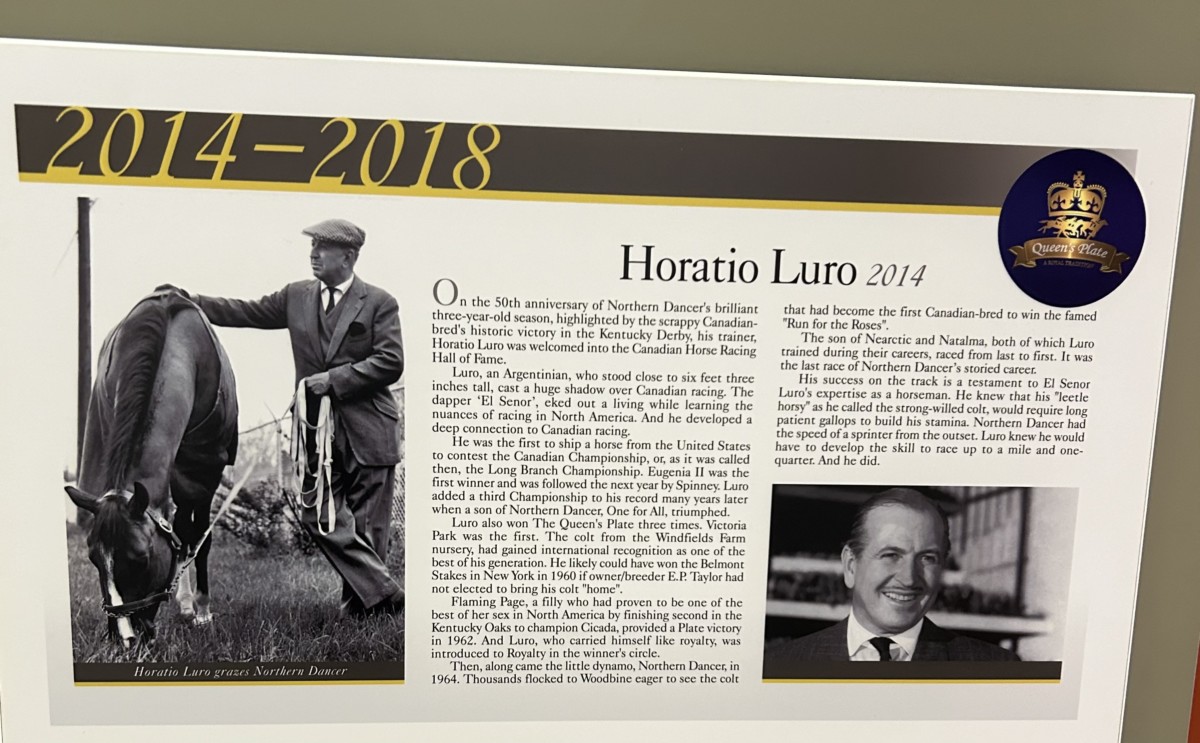
Northern Dancer and his owner breeder E. P. Taylor were both inducted into the Canadian Horse Racing Hall of Fame as part of its inaugural class in 1976. Trainer Horatio Luro was inducted much later in 2014 at a time the Hall began to recognize those from an international perspective who had a significant impact on Canadian Racing. All three are enshrined in the National Museum of Racing and Hall of Fame in Saratoga, New York.
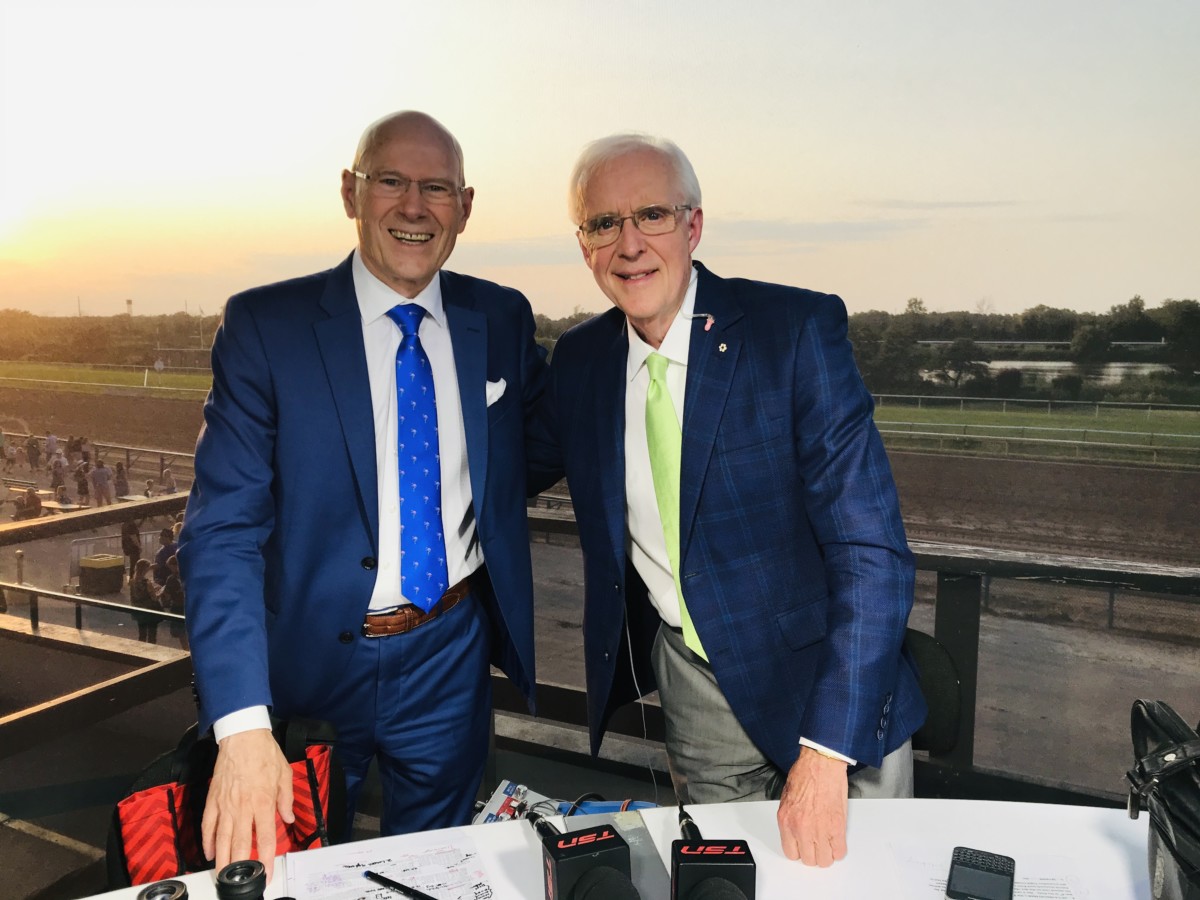
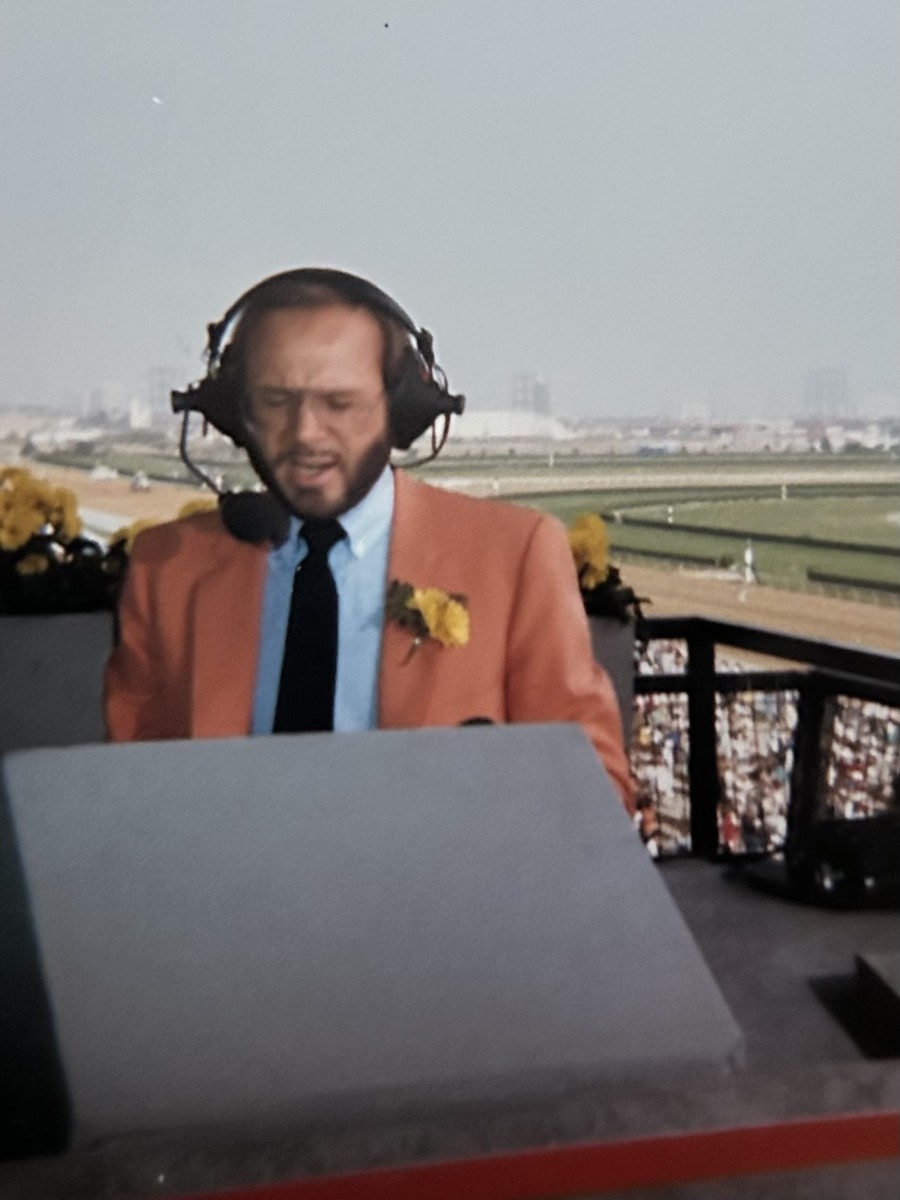
Jim Bannon’s illustrious career has accorded him induction into two Halls of Fame, a Gemini Award in 2010 as Canada’s best sports analyst, numerous accolades for his work as an educator and humanitarian, and his dedicated involvement in Woodbine Racetrack’s Chaplaincy program. Jim enjoyed a memorable career as one of North America’s leading handicappers, racing analysts and TV commentators.