
The staff at *National Stud’s Oshawa foaling barn in the late spring of 1961 were at a disadvantage when the mare Natalma was close to giving birth. Because she had been a maiden, they had no previous record/pattern of what to expect or when the big moment might come.
So on May 27th, a smallish bay colt arrived. He was a very late foal according to the breeding calendar simply because the mare was bred late the season before. She was mated to the farm’s new stallion, Nearctic after suffering a knee injury while racing. But along with her abundant ability, she also possessed a nasty disposition. Well, she certainly passed that trait along to her first-born!
Being behind physically compared to others born that year, he had to fend for himself when turned out with other foals and when growing up, his mostly poor behavior at the farm would soon be on full display at the racetrack, too.
According to author Lou Cauz, his temperament was “feisty, wilful, and Napoleonic” but never “cuddly” which wasn’t a surprise given Natalma was considered to be the real culprit.
“When he was being saddle-broke, he was strong-headed and was known among the exercise riders as a very bad ride” said Joe Thomas, Windfields’ VP at the time. The “low lad” on the roster had to ride him and more often than not, would be put on the ground. His bag of tricks would continue on at the racetrack until he gradually conducted himself better as success came along. He was full of himself and full of character as well. In fact, Mr. Thomas believed that Northern Dancer (as he would be later named by Mrs. Taylor) “realized who he was and what he was and was demanding the attention he thought he deserved.”
So, the unnamed colt was offered for sale including the entire yearling crop in 1962 as per normal by owner Mr. E.P. Taylor at the original farm property in North York. The reserve price of $25,000 was rather pricey as the mare had no produce record. Additionally, not being big in stature and a late foal were considered negative so he remained with his breeder.
And that fact would eventually be monumental as both his racing and stud careers were handled by Windfields’ competent, experienced management and staff. And I would know. I was there!
I must re-tell this story:
When the Dancer’s racing career was near its end, Mrs. Taylor sent word to the barn saying she would be coming with a young blind boy to visit the horse. Prior to their timed arrival, trainer Horatio Luro went in to put on the halter but made a quick exit as he was run out of the stall.
Northern Dancer would have no part of it. Rather, Luro’s trusted groom Bill Brevard was summoned to handle the task. Well, you know what the horse did next. When the two came to his stall, he dropped his head over the webbing allowing the boy to stroke his face and feed him peppermints. Then as soon as they departed, he returned to his usual ornery ways at least, on that day!
Some interesting facts for you:
After Northern Dancer’s successful first season in Canada, he was shipped by famed trainer Horatio Luro to New York in late November for the prestigious Remsen Stakes which he won and sealed his status as the best juvenile in the northland. However, in an era when there was no internet, no social media, no cell phones, or sports specialty channels the race was mostly overlooked by TV, radio, and newspaper outlets of the day because North America was focused entirely on the assassination of JFK, which occurred just five days earlier.
Then when the Dancer won the Kentucky Derby the following first Saturday in May, the Maple Leafs won the ‘64 Stanley Cup a few days earlier thereby denying again both the sport and the horse’s connections the max media attention they rightly deserved.
I started my professional career in racing at Windfields in 1967 age 19 on York Mills and Bayview Ave. in the North York area of Toronto. I was assigned directly to the racing division under the supervision of Hall of Fame trainer Gordon “Pete” McCann. The racing barns and paddocks were located on the north side of York Mills Blvd., which intersected the property with Mr. Taylor’s estate home on the southwest side of Bayview Ave.
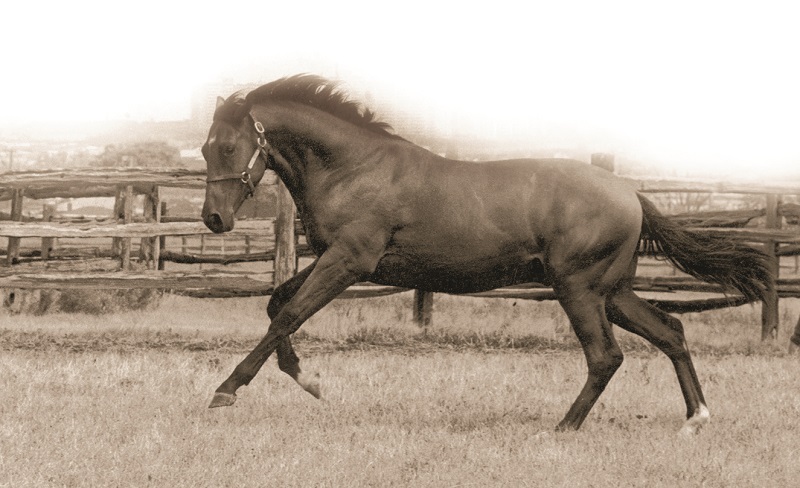
But the southside of York Mills Blvd. had barns and paddocks for the yearlings. That’s where I saw for the first time a strapping bay colt flex his muscle-rippling frame in the morning sun. He was known then as the “Flaming Page colt” who would later when sold be officially named Nijinsky.
It was then and there that I came to realize the true brilliance of Northern Dancer. This son from only his second crop would go on to become the first winner of the English Triple Crown in 35 years, doing so in 1970.
Of course, Northern Dancer’s legacy as a stallion superstar is well documented. That’s because for him there was no limit to his greatness. To be honest, he touched our hearts as Canadians and his starry talents touched the sky!
* National Stud was renamed Windfields Farm when the operation relocated to Oshawa in the early 70s.
Tom Cosgrove is the former Director of Racing and Archivist at Woodbine Racetrack. He also chaired the Nomination Committee for the Canadian Horse Racing Hall of Fame.